Embark on a journey through the colorful world of martial arts belts and rankings, where dedication, discipline, and symbolism intertwine to create a fascinating tapestry of progression and achievement.
Explore the evolution of belt systems, the significance of different colors, and the psychological impact they have on martial artists as they strive for excellence.
MARTIAL ARTS
Martial arts have a rich history dating back centuries and have origins in various cultures around the world. These ancient combat practices have evolved into a form of physical and mental discipline that is widely practiced for self-defense, physical fitness, and personal development.
Types of Martial Arts and Their Origins
- Karate: Originating in Okinawa, Japan, karate focuses on striking techniques using punches, kicks, knee strikes, and elbow strikes.
- Taekwondo: Developed in Korea, taekwondo emphasizes fast kicking techniques and is known for its dynamic and powerful movements.
- Judo: Founded in Japan, judo is a grappling martial art that focuses on throws and joint locks to subdue opponents.
- Kung Fu: Originating in China, kung fu encompasses a wide range of fighting styles, including both striking and grappling techniques.
Importance of Martial Arts in Different Cultures
Martial arts hold significant cultural importance in many societies around the world. They are often deeply rooted in traditions and are passed down through generations as a way to preserve history, honor ancestors, and instill values such as discipline, respect, and perseverance.
Benefits of Practicing Martial Arts
- Physical Fitness: Martial arts training improves strength, flexibility, endurance, and overall physical health.
- Self-Defense: Learning martial arts techniques can help individuals protect themselves in dangerous situations.
- Mental Discipline: Practicing martial arts requires focus, concentration, and self-control, leading to improved mental clarity and emotional stability.
- Confidence and Self-Esteem: Achieving belts and rankings in martial arts can boost confidence and self-esteem through personal growth and accomplishment.
MARTIAL ARTS BELTS AND RANKINGS
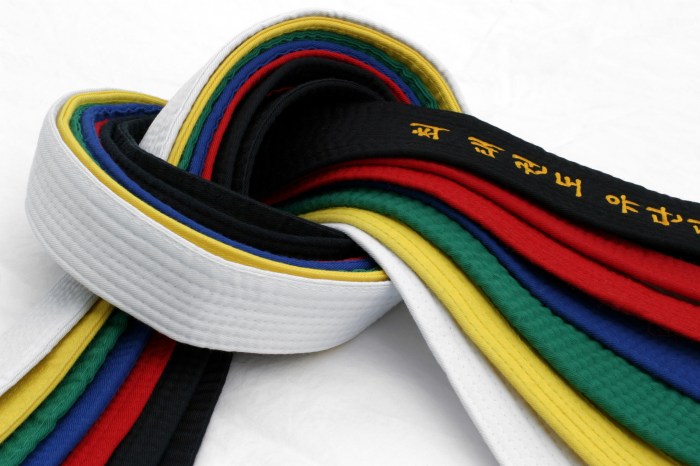
In martial arts, the belt ranking system is a way to signify the level of skill and experience of practitioners. As students progress in their training, they are awarded different colored belts, each representing a milestone in their journey towards mastery.The significance of different belt colors in martial arts lies in the progression they symbolize. White belts typically represent beginners, while black belts are often associated with advanced practitioners.
The colors in between signify various stages of growth and development, with each belt color requiring a higher level of proficiency and understanding.
Criteria for Advancing to Higher Belt Ranks
- Technical proficiency: Demonstrating mastery of techniques specific to the martial art.
- Physical fitness: Showing improvement in strength, flexibility, and endurance.
- Mental discipline: Displaying focus, determination, and respect for the art.
- Knowledge and understanding: Grasping the history, philosophy, and principles of the martial art.
Evolution of the Belt Ranking System Over Time
Originally, martial arts did not have a belt ranking system. It was introduced in the late 19th century by Jigoro Kano, the founder of judo, as a way to track progress and provide motivation for students. Since then, the system has been adopted by various martial arts disciplines, each with its own unique belt colors and criteria for advancement.
BELT COLORS AND MEANINGS
In martial arts, belt colors hold significant meaning and symbolism. They represent the progression and level of expertise of a martial artist. Each belt color has its own unique symbolism and significance, influencing the mindset and motivation of practitioners.Belt colors can vary between different martial arts disciplines, with some arts using a different color scheme or order of progression. However, there are some common meanings associated with popular belt colors that are widely recognized across various martial arts styles.
Symbolism of Belt Colors
- White Belt: Symbolizes purity, innocence, and the beginning of a journey. It represents a blank slate and the potential for growth and development.
- Yellow Belt: Signifies the first rays of sunlight that illuminate the darkness, representing the initial stages of learning and understanding.
- Orange Belt: Represents the rising sun and the energy and warmth it brings. It symbolizes progress and the strengthening of skills.
- Green Belt: Symbolizes growth, like the sprouting of a plant. It reflects the progress and improvement of a martial artist.
- Blue Belt: Represents the sky, which is vast and limitless. It signifies further progress and the deepening of knowledge.
- Purple Belt: Symbolizes the transition from a beginner to an intermediate level. It represents the merging of the beginner and advanced stages.
- Brown Belt: Signifies maturity and the ripening of skills. It represents the advanced stages of learning and the preparation for black belt.
- Black Belt: Symbolizes mastery, excellence, and the attainment of a high level of skill. It represents the beginning of a new journey towards continued growth and improvement.
The psychological impact of belt colors on martial artists is profound. Each color serves as a visual reminder of progress and achievement, motivating practitioners to set goals and strive for advancement. The journey through the various belt colors instills discipline, perseverance, and a sense of accomplishment in martial artists as they move towards higher levels of expertise.
PROGRESSION AND GOALS

Setting goals for achieving higher belt ranks in martial arts is essential for a practitioner to stay motivated and focused on their journey. It provides a clear roadmap for improvement and helps measure progress over time. Without goals, it can be easy to lose sight of the purpose of training and become stagnant in skill development.The importance of discipline and dedication in belt progression cannot be overstated.
Consistent training, hard work, and perseverance are key components in advancing through the ranks. Martial arts require a high level of commitment, and those who are dedicated to their practice are more likely to succeed in reaching their goals.Achieving higher belt ranks impacts a martial artist’s journey by instilling a sense of accomplishment and pride. It signifies growth and improvement in skills, knowledge, and character.
Each belt represents a new level of proficiency and understanding, pushing the practitioner to continue challenging themselves and striving for excellence.Strategies for overcoming challenges during belt advancement vary from individual to individual, but some common approaches include seeking guidance from instructors, practicing regularly, staying motivated, and maintaining a positive mindset. It is important to remember that setbacks are a natural part of the learning process and should be viewed as opportunities for growth rather than obstacles.
Strategies for Setting and Achieving Goals
- Set specific, measurable, achievable, relevant, and time-bound (SMART) goals for each belt rank.
- Create a training plan with milestones to track progress and stay on target.
- Stay accountable by sharing goals with instructors, training partners, or peers.
- Celebrate achievements along the way to stay motivated and focused.
- Adjust goals as needed based on feedback from instructors and personal reflection.
Concluding Remarks
In a world where belts represent more than just fabric, the pursuit of higher ranks in martial arts is a testament to one’s commitment to self-improvement and personal growth. As practitioners navigate the challenges and triumphs of their journey, each belt becomes a symbol of resilience and determination.
FAQs
What do different belt colors signify in martial arts?
Each belt color represents a specific level of skill and knowledge, with black typically symbolizing mastery.
How can one advance to higher belt ranks?
Advancing in belt ranks requires dedication, consistent practice, and meeting specific criteria set by the martial arts school or organization.
Do belt colors have different meanings across various martial arts disciplines?
Yes, while some colors may have universal meanings, interpretations can vary between different styles of martial arts.