Step into the world of martial arts as we unravel the fascinating journey of combat styles through the ages, exploring their origins, evolution, and cultural significance. Get ready for an enlightening adventure!
From ancient battlegrounds to modern dojos, the history of martial arts is a tapestry woven with skill, discipline, and tradition. Let’s dive deep into this captivating realm!
Introduction to Martial Arts
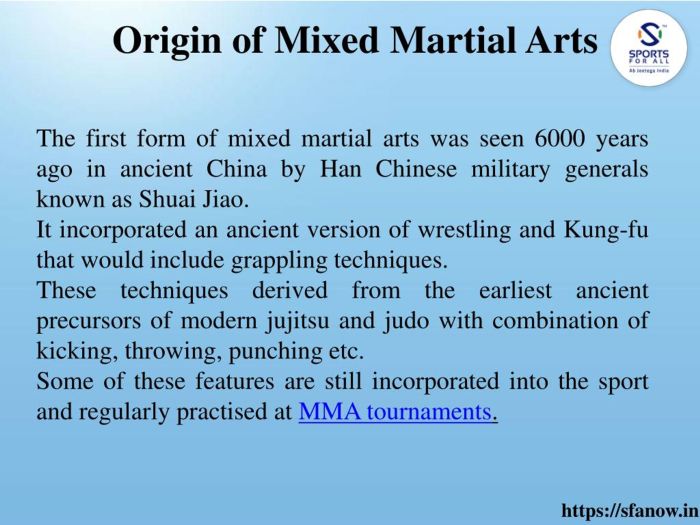
Martial arts encompass a variety of combat practices and traditions that have been developed and refined over centuries. These disciplines hold great significance in cultures around the world, serving as tools for self-defense, physical fitness, mental discipline, and spiritual growth.The origins of martial arts can be traced back to ancient civilizations, where warriors and soldiers honed their skills for combat and protection.
Over time, these practices evolved into structured systems with distinct styles and techniques that are passed down through generations.
Different Styles and Techniques
- Karate: A Japanese martial art that focuses on striking techniques using punches, kicks, knee strikes, and elbow strikes.
- Kung Fu: Originating in China, Kung Fu encompasses a wide range of fighting styles that emphasize speed, agility, and flowing movements.
- Judo: Developed in Japan, Judo is a grappling-based martial art that emphasizes throws, joint locks, and pins.
- Capoeira: A Brazilian martial art that combines elements of dance, acrobatics, and music, known for its fluid and deceptive movements.
Each style of martial arts has its unique philosophy, training methods, and techniques, making them diverse yet interconnected in their goal of physical and mental development.
Historical Timeline of Martial Arts
Martial arts have a rich history dating back to ancient times, influenced by various civilizations and societies. Throughout the centuries, numerous key events and famous martial artists have contributed to the development and evolution of martial arts as we know them today.
Ancient Times
- The earliest recorded evidence of martial arts dates back to ancient Egypt, where tomb paintings depict scenes of hand-to-hand combat.
- Ancient Greece also had a strong tradition of martial arts, with the Olympic Games including events such as wrestling and boxing.
- In China, martial arts can be traced back to the Xia Dynasty (c. 2100–1600 BC) with the development of fighting techniques and training methods.
Medieval Period
- During the Middle Ages, European knights practiced martial arts as part of their training for combat.
- Japanese martial arts, such as Jujutsu and Kenjutsu, flourished during the feudal era, with the samurai class honing their skills in combat.
Modern Era
- In the 19th and 20th centuries, martial arts underwent a period of modernization and standardization, leading to the development of disciplines like Karate, Taekwondo, and Judo.
- Iconic martial artists such as Bruce Lee and Jackie Chan popularized martial arts through their films and contributions to the practice.
- The spread of martial arts around the world has led to the formation of international organizations and competitions, showcasing the diversity and skill of practitioners globally.
Cultural Impact of Martial Arts
Martial arts have had a profound impact on cultures around the world, influencing traditions, values, and entertainment. Let’s explore how martial arts have been integrated into various societies and media forms.
Promotion of Discipline, Respect, and Physical Fitness
- Martial arts emphasize discipline through rigorous training regimens and adherence to strict codes of conduct.
- Respect is a core value in martial arts, teaching practitioners to honor their instructors, opponents, and the art itself.
- Physical fitness is a key component of martial arts, promoting strength, flexibility, and overall well-being.
Portrayal in Media
- Martial arts have been prominently featured in movies, showcasing thrilling fight scenes and skilled techniques.
- Literature often romanticizes martial arts, depicting heroic warriors and their journeys of self-discovery and mastery.
- In popular culture, martial arts have inspired video games, comic books, and TV shows, perpetuating the mystique and allure of these ancient fighting styles.
Philosophy and Principles of Martial Arts
Martial arts go beyond physical combat; they encompass a rich tapestry of philosophies and principles that guide practitioners in their journey of self-discovery and personal growth.
Core Principles of Martial Arts
- The principle of discipline: Martial arts emphasize the importance of self-discipline and self-control in all aspects of life, not just in combat situations.
- The principle of respect: Respect for oneself, others, and the art itself is fundamental in martial arts practice.
- The principle of perseverance: Martial artists are encouraged to push through challenges and setbacks to achieve their goals.
- The principle of humility: Practitioners are taught to remain humble and open to learning from others, regardless of rank or experience.
Spiritual and Mental Aspects of Martial Arts
Many martial arts disciplines place a strong emphasis on mental and spiritual development alongside physical training. Meditation, mindfulness, and breathing techniques are often incorporated to help practitioners cultivate inner peace, focus, and mental clarity.
Comparison of Philosophies in Different Martial Arts Styles
| Style | Philosophy |
|---|---|
| Karate | Emphasizes discipline, respect, and self-improvement through rigorous training and adherence to tradition. |
| Taekwondo | Focuses on the tenets of courtesy, integrity, perseverance, self-control, and indomitable spirit. |
| Kung Fu | Rooted in Confucian and Taoist philosophies, kung fu values harmony, balance, and the interconnectedness of mind, body, and spirit. |
Closing Notes
As we conclude our exploration of the history of martial arts, remember that behind every strike and stance lies a rich heritage of resilience, honor, and dedication. Embrace the spirit of these ancient disciplines and unleash your inner warrior!
Frequently Asked Questions
What are some lesser-known martial arts styles?
Some lesser-known martial arts styles include Capoeira, Hapkido, and Krav Maga, each with its unique techniques and origins.
How has martial arts influenced popular culture?
Martial arts has influenced popular culture through movies, TV shows, and even video games, showcasing the beauty and power of various combat styles.
Are there any female martial arts pioneers?
Yes, notable female martial arts pioneers include Yip Chun (Wing Chun), Michelle Waterson (MMA), and Lila Roo (Capoeira), who have made significant contributions to the martial arts world.